




MacDoodle St.
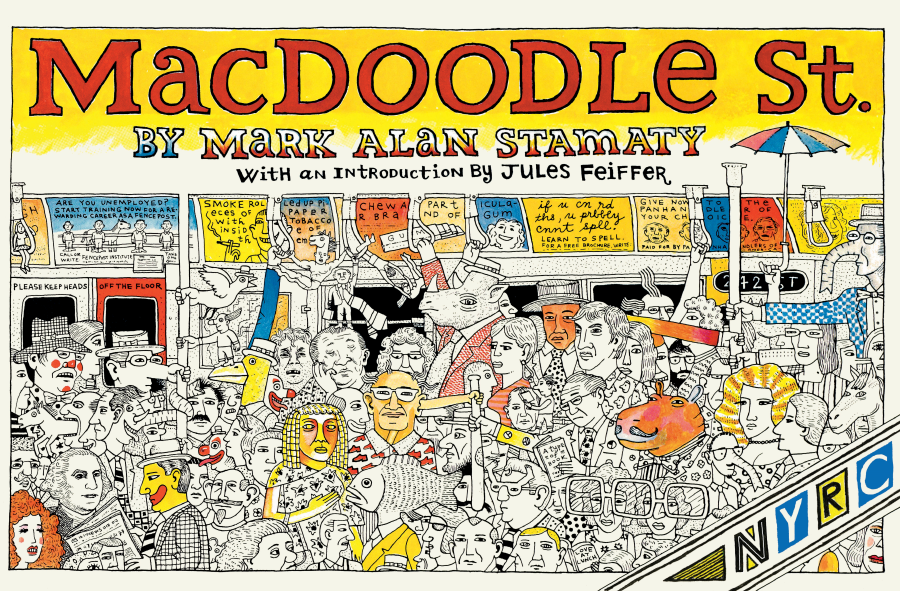
Every week, from 1978 to 1980, The Village Voice brought a new installment of Mark Alan Stamaty’s uproarious, endlessly inventive strip MacDoodle St. Centering more or less on Malcolm Frazzle, a blocked poet struggling to complete his latest lyric for Dishwasher Monthly, Stamaty’s creation encompassed a dizzying array of characters, stories, jokes, and digressions. One week might feature the ongoing battle between irate businessmen and bearded beatniks for control of a Greenwich Village coffee shop, the next might reveal a dastardly plot involving a genetically engineered dishwashing monkey, or the frustrated dreams of an irascible, over-caffeinated painter, or the mysterious visions of a duffle-coated soothsayer on the bus. Not to mention the variable moods and longings of the comic strip itself….
And somehow, in the end, it all fits together. MacDoodle St. is more than just a hilarious weekly strip; it is a great comic novel, a thrilling, surprising, unexpectedly moving ode to art, life, and New York City. This new edition features a brand-new, twenty-page autobiographical comic by Stamaty explaining what happened next and why MacDoodle St. never returned, in a unique, funny, and poignant look at the struggles and joys of being an artist.
Look inside...
Reviews
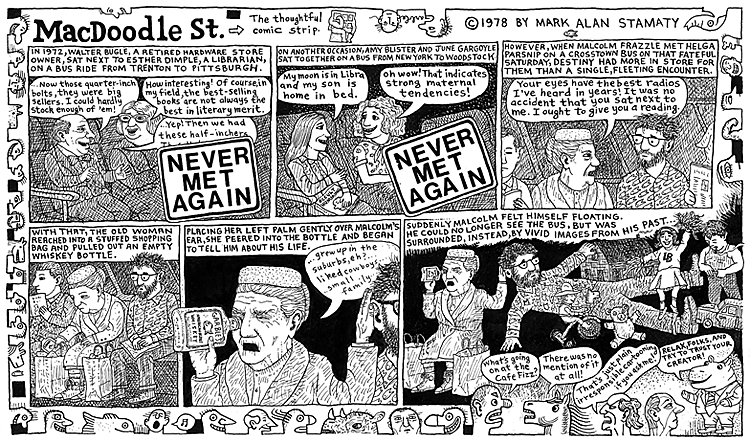
The Conservative Liberation Front’s raid to protest Cafe Fizz's no-tie, pro-beard policy interrupts poet Malcolm Frazzle, hunkered down in a corner and on deadline for Dishwasher Monthly. Rabid Wayne Newton fans chase Malcolm from the cafe and through the city, where, on a bus, he meets an older woman who receives visions by peering through an empty whiskey bottle. She plays doula to Malcolm’s newest poem—a poem that will save the world from a would-be tyrant seeking to genetically engineer a mindless race of dishwashers. Though the story focuses on Malcolm, the main character here is the comic strip itself, which takes on an anthropomorphic appearance at the top of each page, alongside the title and mercurial tagline, as well as in several strips throughout the series, like one of pure doodles, no story, captioned, “Sometimes a comic strip just gets in a mooood.” Small, intricate patterns of faces make up the borders of many strips, sometimes complaining about the larger story. Stamaty treats the strip like a canvas, filling it with layers of meticulous detail; tight, clean lines; playful self-awareness; and monkeys washing dishes. In a new addendum, Stamaty looks back at the challenges of meeting weekly deadlines, how his level of work seemed unsustainable, and there is a shift about two-thirds of the way through the book: fewer strips with intricate borders and more panels filled completely with words. Though Stamaty’s words are sly and kinetic, one can’t help wanting more of his stupendous illustrations, somewhere between R. Crumb and Hergé.
Mostly superb with bouts of just excellent.